Painting Subjects
A Watercolor Sketchbook Through the School Year
Keeping a watercolor sketchbook through a season of school events: quick studies of games, concerts and club meetings, and what to carry in the bag.
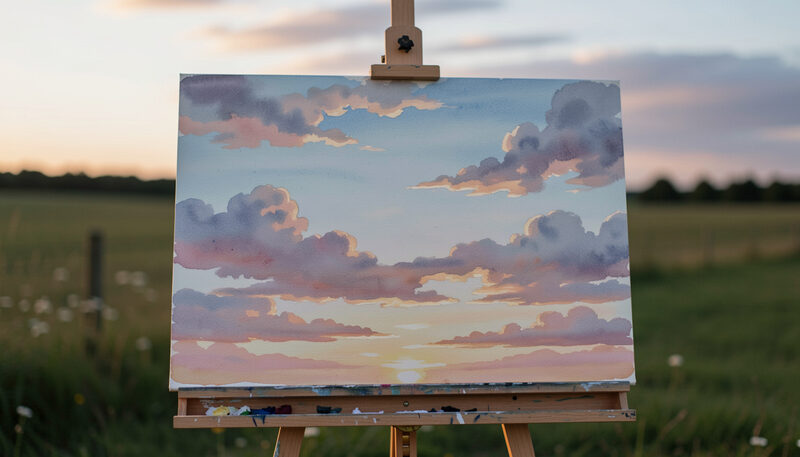
A watercolor sketchbook can follow a whole school year if the painter plans for short sittings and small pages. Games, concerts and club meetings each offer twenty to forty minutes of waiting, watching and standing, which is enough for one or two quick studies. The kit that works is light, stable and quick to open, because the season rarely pauses for a painter to arrange a bag.
When does high school bowling season start, and how do tryouts and Baker format competitions work?
Bowling sits in the winter season in most state athletic associations, with practices beginning in November and the first matches often in early December. Tryouts usually take the form of a set number of games, and coaches watch average, spare conversion and consistency rather than a single high score. A new bowler can prepare by learning to pick up the ten pin and by keeping a simple record of each game.
Competition formats vary, but the Baker format is common in high school play: five bowlers combine to complete one game, each throwing two frames in order, so the team score belongs to everyone. A spectator with a sketchbook sees this as a rhythm of five figures rotating through the same approach. The painter who wants a page from a bowling match should arrive early, choose a seat behind the return rack, and work small: the run-up is a vertical line, the release a compact shape, the ball return a dark horizontal. A page of six tiny figures in a row reads as a match better than one large, unfinished portrait. Families who want the full schedule, eligibility rules and travel details for a district can find them in a guide such as high school bowling, which sets out seasons, tryouts and the Baker format in plain terms.
When is high school track and field season, and what should students expect at practices and meets?
Track and field runs in the spring in most states, with practice starting in February or March and the championship meets in May. Indoor meets may appear earlier in some regions. Practices mix warm-up laps, drills by event group, and repeated efforts at race pace; a distance runner may cover five to eight miles in a session, while a thrower spends the same time on technique and short, powerful sets.
A meet is long. Field events begin in the morning, running finals come later, and a team may sit under a tent for six hours to compete for two minutes. That waiting is the painter's advantage. The infield, the starting line and the finish chute give three distinct compositions, and the light changes enough across the day to justify two versions of the same view. Carry a small block, not a full sheet, and paint the crowd and the officials as simple silhouettes. The runners themselves are best caught in a single gesture: a lean at the start, a stride at the curve, a collapse after the line.
When is high school golf season and what should new players know?
Golf belongs to the fall season in many states, with a shorter spring season in others. Tryouts are usually a qualifying round or two, and coaches look at ball striking, course management and pace of play as much as score. New players should expect to walk nine holes carrying their own bag, to learn the etiquette of repairing divots and raking bunkers, and to keep a scorecard honestly.
For a sketchbook, golf is the quietest of the three sports. The course is green, wide and slow, and a player stands still over the ball for several seconds. A painter can sit near a tee box and work a small study of a single figure against the fairway, then turn the page and paint the bunker edge or the flag. The palette is limited: two greens, a sand tone, a sky. That limitation is useful in a season of busy events, because it forces attention on value rather than on color mixing.
What belongs in the bag for a season of school events?
A sketchbook that travels to games and concerts should be small enough to hold in one hand and stiff enough to paint on without a table. A hardbound book of about five by eight inches, or a block of cold-pressed paper of similar size, works well. Cotton paper handles a wet wash without buckling, but a lighter paper is acceptable if the painter keeps the washes small and lets each one dry.
A compact palette of eight to twelve colors covers most gyms, fields and auditoriums. Add a water brush or a small synthetic round, a soft pencil, a kneaded eraser and a rag. A tiny spray bottle helps in a dry gym. Everything fits in a zippered pouch that can sit on a lap or a bleacher seat.
Light is the real constraint. Gymnasiums and auditoriums are dim and warm, so a small battery lamp or a seat near an exit sign can help. Outdoors, a hat and a bottle of water matter more than any pigment. A painter who plans for twenty minutes of work will finish more pages than one who waits for a free afternoon.
How do you paint a concert or a club meeting in low light?
Concerts and club meetings happen in the evening, often in a room with a stage, a few spotlights and a dark audience. Watercolor is difficult in these conditions, and the honest approach is to simplify. Work with a limited palette: a warm dark for the hall, a cool dark for the shadows, one bright note for the stage. Paint the choir as a row of shoulders and heads, not as faces. Paint the speaker at a club meeting as a shape against a screen.
A sketch made in ten minutes during a concert will not be accurate, but it will hold the arrangement of the room and the color of the light. Notes written beside the sketch, such as the name of the piece or the title of the talk, turn the page into a record. The next morning, a second small study from memory can add the details that the dark room hid.
How do you keep the habit going across a whole season?
A season of school events is a sequence of short, repeated occasions, and the sketchbook benefits from the same rhythm. Set a modest target: one page per event, or two studies per week. Date every page. Keep the book in the same bag as the tickets and the schedule, so that leaving the house without it feels like leaving without keys.
Some pages will fail. A golf study may end as a green smear, a track meet as a row of unfinished legs. Those pages still carry information about light, distance and speed, and they make the successful pages easier to recognize. By the end of the spring, the book holds a record of a school year that no photograph can match: the cold gym in December, the bright infield in April, the dim auditorium in between.
A painter who wants to understand the calendar behind these events, from bowling in the winter to track in the spring and golf in the fall, can read the schedules and rules published by the state athletic associations. The seasons shape the sketchbook as much as the paper does.
A sketchbook carried through a school year records more than finished drawings: it shows how the hand learns to repeat a shape until it stops hesitating. The habit matters more than the session's length. Ten minutes at the same hour, one wash or one row of strokes, keeps the eye and the brush in agreement between longer painting days. For readers who want that rhythm set out plainly, the magazine's guide to a ten-minute daily drill describes the repeated wash, the warm-up strokes, the desk and board arranged so brush and eye sit right, and the short breaks that hold fatigue off. Close the sketchbook, then begin again tomorrow.