Painting Subjects
Painting Subjects in Watercolor
Paint the landscape from observation: skies and cloud, water and reflection, trees and foliage, and the sketchbook habit that makes all three easier outdoors.
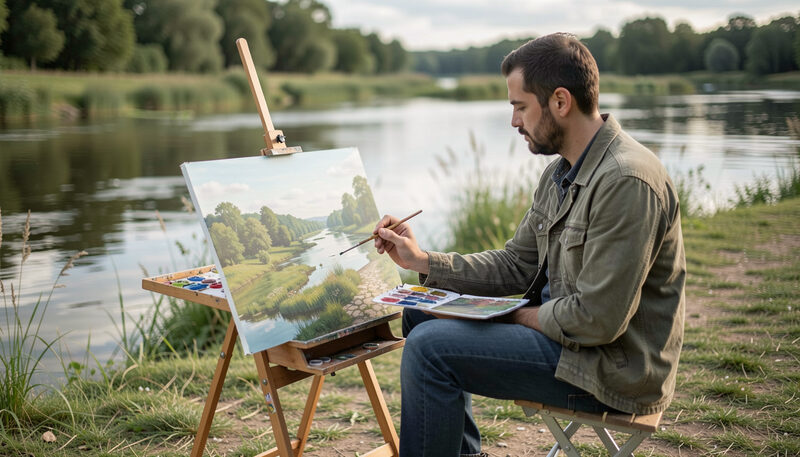
The landscape is the watercolor painter's most generous subject. Sky, water and trees are made of the same soft washes and transparent layers that the medium loves, and they can be studied anywhere, from a window, a park or a riverbank. This section brings the techniques and materials together on the subjects most often painted outdoors: the sky, the water, the trees, and the small sketchbook that ties them into a habit.
Painting from observation
Watercolor rewards painting from life. A photograph freezes the light and hides the way a sky actually changes, the way water moves, the way a tree holds its leaves. Working from observation forces quick decisions about what matters, and those decisions make a stronger painting. It also teaches the painter to simplify: the eye sees thousands of leaves, but the brush needs only the shapes that suggest them.
Sky first
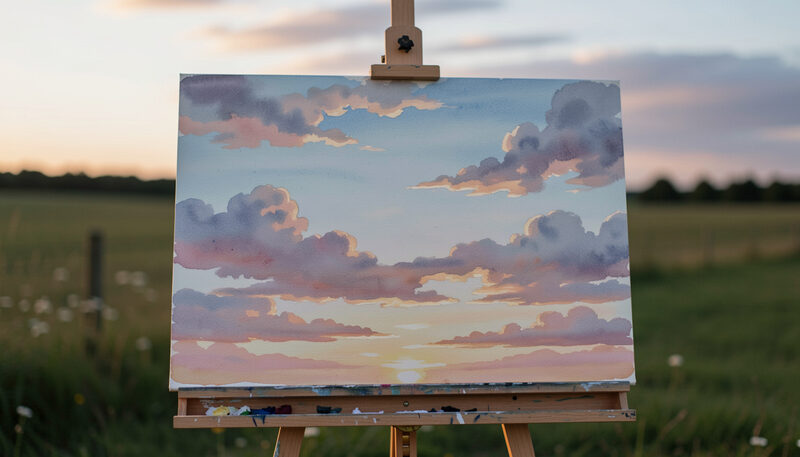
The sky sets the light for everything below it. It is painted first, while the paper is fresh, because it is the largest and wettest passage and it decides the color of every subsequent layer. A graded wash builds the base, and clouds are lifted or added while the wash is damp. The guide to painting skies covers graded washes, soft and hard clouds, and how to keep light at the horizon.
Water and reflection
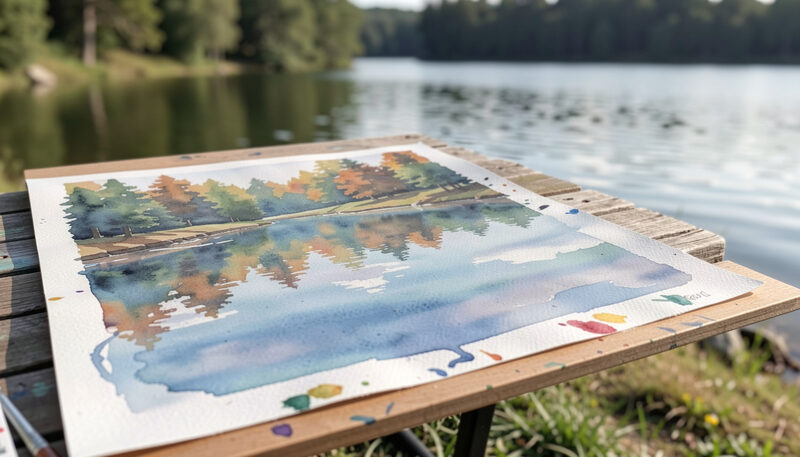
Water is a mirror that moves. Still water reflects the sky and the shore in simple horizontal shapes; moving water breaks those shapes into ripples and fragments of light. The painter reserves the lightest areas as bare paper and builds the dark water around them. Reflections are almost never as dark or as detailed as the thing reflected. The guide to painting water explains still water, moving water and reflections.
Trees and foliage
Trees are painted as masses of tone, not as individual leaves. A wet-on-wet wash gives the soft edge of distant foliage, a dry brush stroke gives the texture of a near branch, and the shape of the trunk carries the character of the species. The sketchbook guide shows how to study a tree quickly, and the technique guides explain the washes and dry brush that build it.
Reading the light before you paint
Before any paint is mixed, the painter decides where the light is coming from, which areas will be left as white paper, and which are the darkest darks. This small plan prevents the common failure of a landscape in which every area is painted the same middle tone. A quick pencil thumbnail, three or four values at most, settles the plan in a minute and saves the painting.
The sketchbook as practice
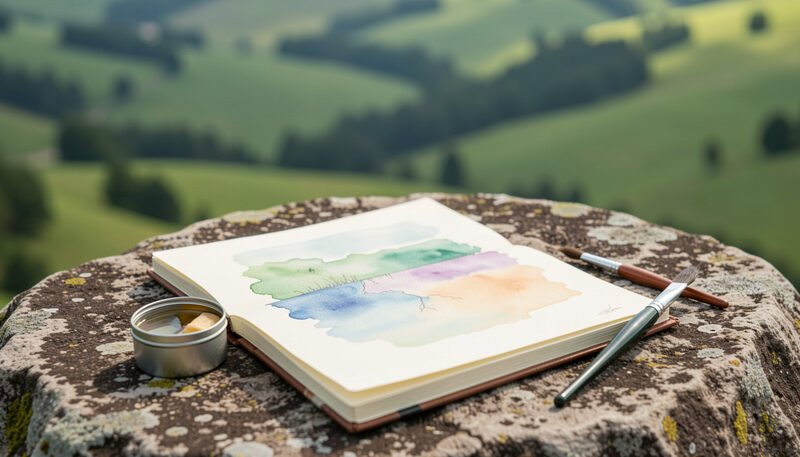
A sketchbook is where the subjects are learned. Small, fast studies of sky, water and trees, made on the spot, build the memory of how each behaves far faster than copying photographs. The habit matters more than the quality of any single page. A painter who fills a sketchbook every few weeks will improve steadily, and will arrive at a large painting with the subject already understood.
Composition in the landscape
A landscape is arranged as much as observed. The horizon is usually placed away from the middle of the paper, high or low, so that either the land or the sky dominates. A single strong shape, a tree, a bend in a river, a building, is given more space than the rest and becomes the focus. Paths, rivers and roads lead the eye into the picture rather than out of it. These choices are made in a pencil thumbnail before any paint is mixed, because composition is far easier to fix in pencil than in watercolor.
Working from photographs, carefully
Photographs are useful when the weather or the distance prevents painting from life, but they flatten the light and freeze the moment. Used as a reminder of a place already studied in a sketchbook, a photograph is helpful; used as the only reference, it tends to produce a picture with no light in it. The best practice is to sketch on the spot, note the light and the colors, and use the photograph only for shapes and detail back in the studio. The painting then carries the memory of the day rather than a copy of a screen.
Where to start
Begin with the sky, because it is the simplest to practice and the most useful to master, then move to water and trees. Keep the paintings small at first, so that a whole passage can be finished in one sitting and the lesson is clear. The technique section provides the washes and glazing that every subject here depends on, and the materials section explains the paper and brushes that make the work easier.
Painting Subjects
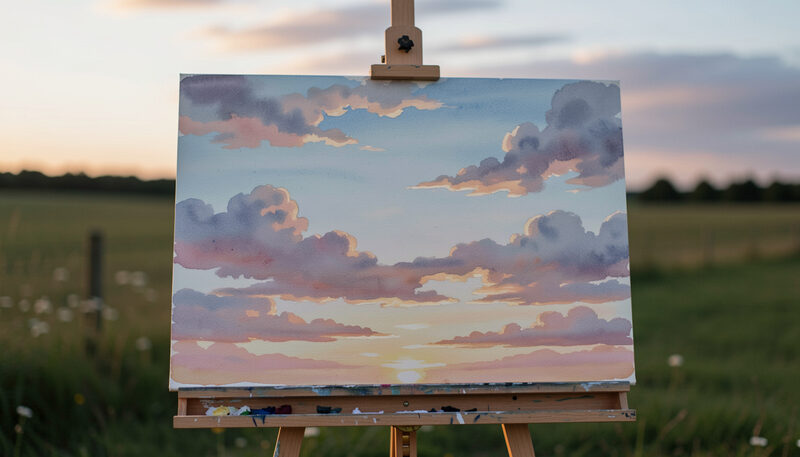
Painting Skies in Watercolor
Paint watercolor skies with confidence: building a graded base, lifting clouds, keeping light in the horizon, and reading the sky before the paper is wet.
A graded base, lifted clouds and light kept at the horizon.
Painting Subjects
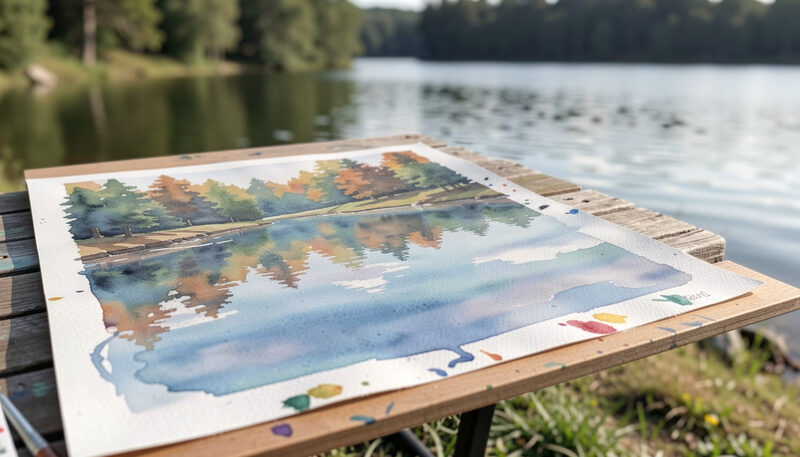
Painting Water in Watercolor
Paint still water, moving water and reflections in watercolor: reading the surface, keeping reflections simple, edges and ripples, and reserving the light.
Still water, moving water and reflections kept simple.
Painting Subjects
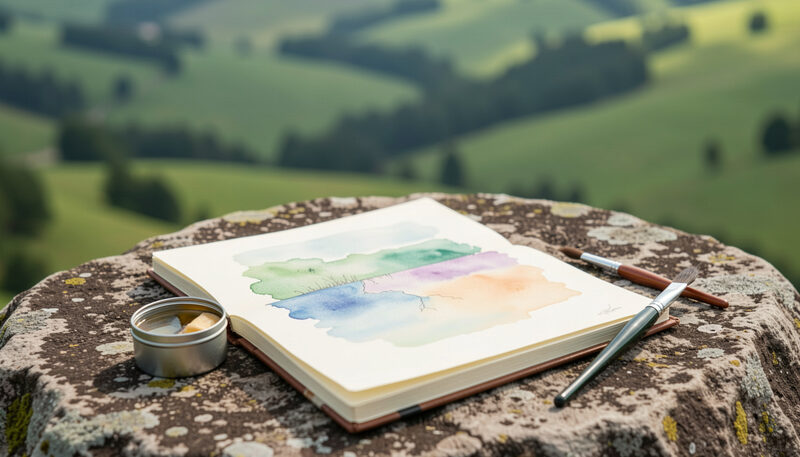
Sketchbooks and Painting Outdoors
Build a watercolor sketchbook habit and paint outdoors: a light kit, a small palette, working fast in changing light, and what to study from each sketch.
A light kit and a weekly habit of small studies.
Painting Subjects
Water in the Wash and Water in the Rite
Still water, moving water and the colour of depth in watercolor, set beside what Baptist churches mean by baptism by immersion and how a service unfolds.
Painting Subjects
Watercolor Picture Books: Spreads, Palette, Revisions
Pacing a picture book across spreads, keeping watercolor readable at a small trim size, and the revision passes a children's book illustration really needs.
Painting Subjects
A Watercolor Sketchbook Through the School Year
Keeping a watercolor sketchbook through a season of school events: quick studies of games, concerts and club meetings, and what to carry in the bag.