Technique
Troubleshooting Watercolor
Fix the common watercolor faults: muddy color, hard edges, backruns and blooms, overworked paper, and paint that dries lighter than it looked.
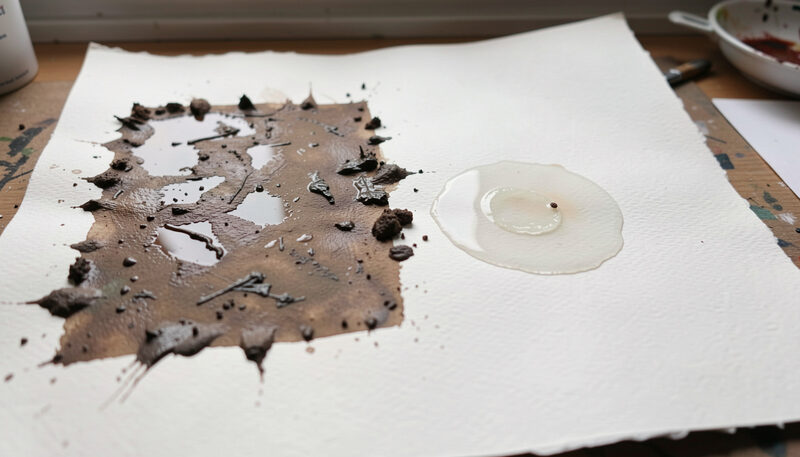
Every watercolor painter meets the same handful of faults, and almost all of them come from the same cause: the water and the paper were not in agreement at the moment the paint was laid. This guide takes the common problems one at a time, explains what actually happened, and gives the repair where a repair exists. The best cure, in nearly every case, is prevention.
Muddy color
Mud is the loss of clarity that comes from mixing too many colors, or from mixing a warm and a cool of the same family on the paper. Three transparent glazes over one another can also turn to mud if they overlap in the wrong order. The cause is usually that the painter kept working an area instead of leaving it alone. The fix is to choose the final color before it is laid, to mix fewer pigments, and to let each layer dry. Once mud is dry, it can be partly lifted with a clean damp brush and a tissue, but the glow will not come back. A good rule is to mix with no more than three pigments and to glaze rather than to stir.
Hard edges where soft ones were wanted
A hard edge appears whenever paint dries with a boundary against dry paper. Sometimes that is wanted, for a roof or a branch. When it is not, the cause is that the painter let the area dry before softening it. To keep an edge soft, the surrounding paper must be damp and the two areas must be joined while both are wet. A hard edge can be softened after the fact by dampening just outside it with clean water and pulling the edge into the damp area, though this is risky on a finished passage.
Backruns and blooms
A backrun, also called a bloom or a cauliflower, is the pale, ragged shape that forms when wet paint is added to an area that has begun to dry. The new water pushes the drying pigment outward and leaves a tide mark. It happens most often in skies and large washes, where the painter returns to a passage that was almost dry. To avoid it, either add new paint while the surface is still uniformly wet or wait until it is completely dry. A single accidental bloom in a sky can be turned into a cloud if it is small and pale, but a ring of them usually means repainting the passage.
Overworked paper
Paper has a surface, and that surface can be worn away. Rubbing with a stiff brush, lifting repeatedly, or painting over an area many times damages the sizing and the fiber. The result is a patch that drinks paint unevenly and looks dull or fuzzy. Cotton paper tolerates more abuse than wood pulp, and heavier paper more than light. To prevent it, lift gently, use a soft brush, and accept small faults rather than fighting them. On a badly overworked sheet the honest answer is a fresh sheet.
Paint that dries lighter than it looked
Watercolor always dries lighter and often duller than it appears when wet, sometimes by a third. This surprises every beginner and leads to timid, washed-out paintings. The cure is to mix the tone darker than the target and to test it on a scrap of the same paper. A useful habit is to keep a strip of spare paper beside the painting and to paint a small square of each color, drying it quickly, so the true value can be judged before it goes onto the picture.
Buckling and cockling
When a lot of water is used, light paper swells and dries with ripples, which catch the light and spoil a flat wash. The remedies are to use heavier paper, to stretch the sheet on a board before painting, or to tape the paper down on all four sides so it dries flat. Blocks of glued paper solve the problem by holding the sheet flat while it is painted. Buckling is not a fault of the painting but of the support, and it is easy to prevent.
Reading the paper before you paint
Many faults are prevented before the first stroke by judging the paper. A sheet that is heavily sized will hold a wet wash open for a long time, which suits glazing but invites backruns if the painter keeps working it. A soft-sized or cheap sheet drinks the paint and dries fast, which suits direct work but makes soft edges hard to keep. A quick test on the corner of the sheet, a wet brush drawn across and watched for a few seconds, tells the painter how much time there is. Knowing the working time of the paper is as important as knowing the colors.
A small repair kit
A few tools make repairs easier. A clean, soft brush and a small sponge or tissue lift color while the paint is damp. A piece of magic tape, pressed onto a dry area and lifted, removes small specks of stray pigment without damaging the surface. A blade or a small damp sponge can recover a highlight on dry paper, though with care, because it abrades the sizing. None of these can restore a passage that has been overworked, but they handle the small accidents that would otherwise spoil an otherwise good painting. Keeping the repair simple and deciding quickly is better than repeated attempts that wear the paper.
Fixing against preventing
Most watercolor faults can be avoided by slowing down and by testing on a spare sheet. A small study of the passage, painted first, tells the painter how the paper and the water will behave. When a fault does appear, decide quickly whether to lift it, to soften it, or to leave it and build around it. A painting is not ruined by one bloom; it is ruined by the painter trying to erase it and wearing out the paper instead. The wash guide and the glazing guide cover the techniques that prevent most of these problems in the first place.
Mud and hard edges often come from the same place: too much water, too little time, and a brush that keeps going back into a passage that has already begun to dry. The fix is rarely a new pigment or a heavier paper. It is usually a smaller study, painted once, without correction. That habit is worth keeping beyond the troubleshooting stage, especially in a season when the painting has to happen in the gaps between other commitments. A guide on rescuing a muddy sketch in a school-year sketchbook covers quick studies of games, concerts and club meetings, painting in low light, and what to carry in the bag.
Most spoiled passages are not caused by a lack of skill but by a lack of attention: a brush loaded too wet, a paper already dry, a hand that moved before the eye had settled. Repairing them teaches judgment, yet the same faults return because nothing in the painting routine isolates them. A short daily practice does. One wash repeated on the same paper, warm-up strokes before any real work, the board tilted so the brush and the eye sit right, and brief pauses to keep fatigue from blurring the line: these are the conditions that make errors visible early, especially when a drill goes wrong.